










If there were no sports calendar to honor, the 2026 World Cup wouldn’t be happening. Not now, with world leaders crushing eggshells all over the planet. Not here, with the United States serving as a contentious co-host. But the calendar doesn’t consult the moment. It just flips with indifference.
So we’re doing this. We’re really doing this. Hide your wallets and freeze your credit cards. Here comes the largest, priciest World Cup ever, right on schedule, forging into a volatile world unprepared to receive it. The scale of this event is astounding: 48 nations, 104 matches, 16 cities, three countries, one continent that made an eager promise of unity eight years ago. Put it all together, and it makes a stunning, poster-worthy graphic. The inclusion looks magnificent on paper.
Yet the great paradox of this historic, expansive World Cup is that it threatens to be the least accessible. There will be more countries on the pitch, but fewer ordinary fans can afford tickets to watch them. For many potential visitors, an obstacle greater than price gouging will be simply arriving without incident, not to mention feeling safe if they do.
The three neighbors hosting the men’s tournament — the U.S., Canada and Mexico — once sold their continental cohesion, but now America is entangled in trade disputes with both of them. Seldom has the red, white and blue welcome mat been more conditional. The numbers suggest this is the biggest global soccer spectacle ever, but in reality, it keeps shrinking. And look at who gets squeezed out: the people who make it matter. So who, exactly, is this World Cup for?
It’s not for the average die-hard, the one for whom this event theoretically exists. It’s not for the fan from Dakar who saved for two years, knowing a U.S. visa was never guaranteed. It’s not for the one who has lived in a jersey purchased in Algiers or Port-au-Prince or Tehran and worn it to every qualifying match. It’s not for the supporters who love this nuanced game with pure, irrational devotion, but now must prove they belong.
The World Cup widened its doorway, but it still feels more closed than ever. It is more expensive and more exposed to geopolitical forces that care little about football and obsess over the content of your passport.
A sobering day
The U.S., Canada and Mexico presented the bid with aspirational charm. They called it United 2026. Three nations. One vision. One continent, harmonizing. It was 2018, and the idea seemed both beautiful and possible. It would be a demonstration of North American solidarity. FIFA approved it. The world embraced it. Excitement grew across the Western Hemisphere.
That was just eight years ago. Today, United 2026 feels more like a relic than a broken promise, a recent memory full of a kind of cooperative spirit that now seems ancient.
When the action begins, the fracture won’t be visible, not amid all the bright flags waving, anthems blaring and crowds chanting. The sport can mask plenty with its passion, color and noise. But the veil is rather thin.
The most sobering illustration of the vibe shift came during the World Cup draw last December.
FIFA switched the ceremony from Las Vegas to Washington, making it easier for President Donald Trump to attend. The day devolved into feeling less like a grand soccer gathering than a political pageant cloaked in a lavish kit. The simple act of placing nations into groups felt almost incidental.
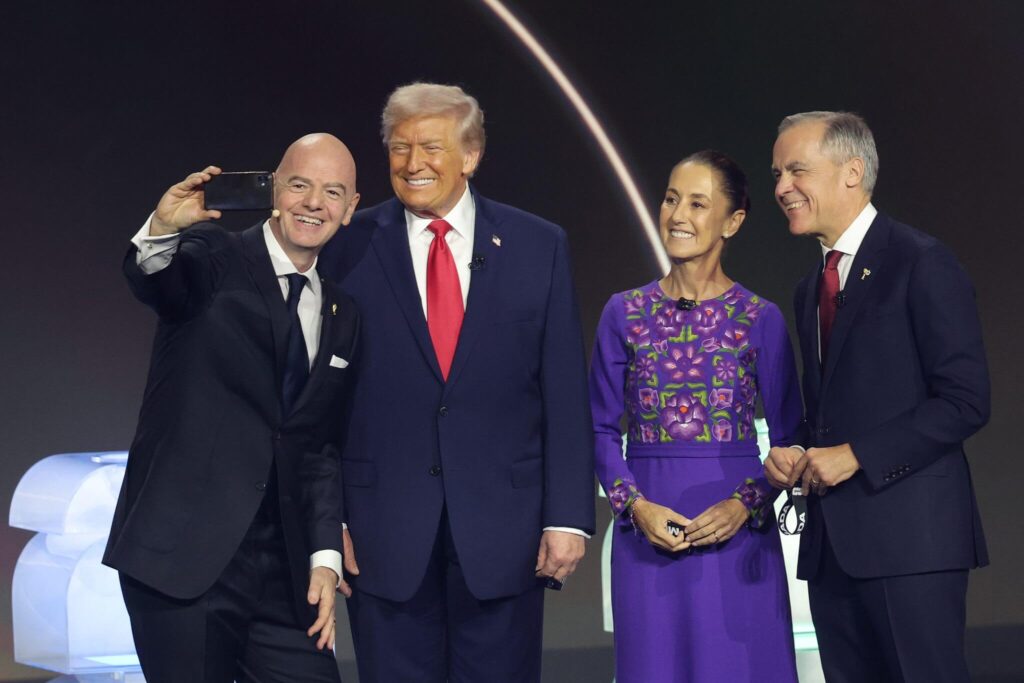
Then came the most memorable part. FIFA president Gianni Infantino presented Trump with the hastily concocted “FIFA Peace Prize: Football Unites the World.” It was an honor in search of an honoree, a predetermined gift to placate a man who would soon unleash military force on multiple countries. Human Rights Watch probed FIFA about the selection process. Six months later, details remain elusive. It was FIFA at its most faithful. Power applauding power.
Jules Boykoff sniffed it from the start. In his new book “Red Card: The 2026 World Cup, Sportswashing and the FIFA Greed Machine,” the Pacific University professor detailed how this event genuflects to money and influence, becoming an accomplice to political reputation laundering.
“Soccer is never just soccer,” he wrote. “And sports are politics by other means.”
Crazy enough, the Peace Prize wasn’t even the most revealing act of the night.
Iran had already qualified for the World Cup. But as tensions between Washington and Tehran deepened, several members of its delegation were denied visas to attend the draw. Their seats were empty but full of tension. The Iranian coach came alone. It was a preview of the world that this tournament must accommodate, a world overcome with conflict, friction and distrust.
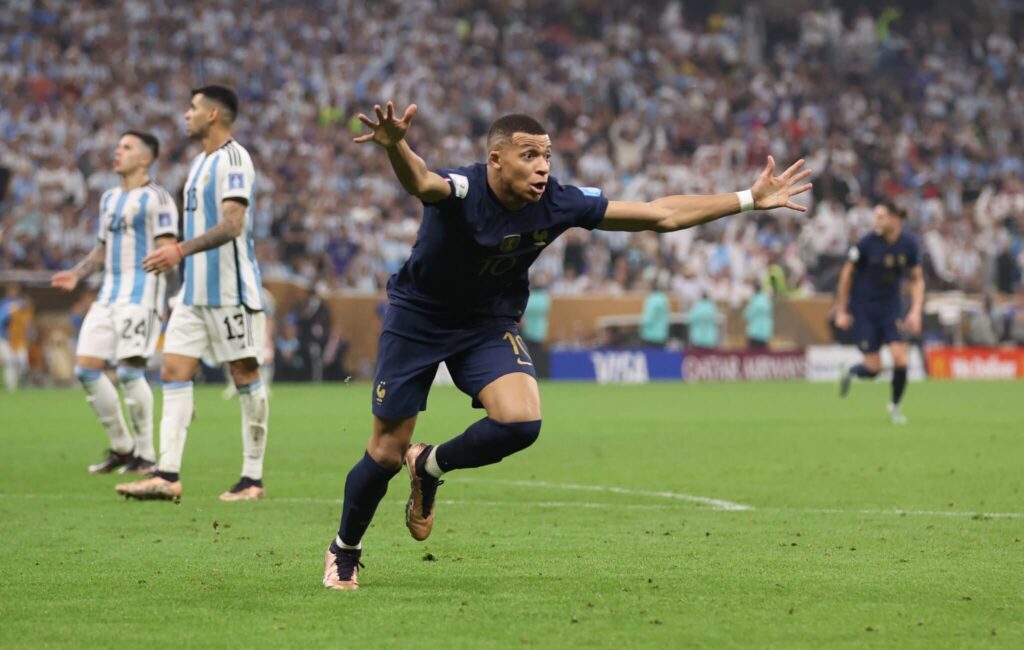
It doesn’t diminish what will happen on the pitch. The beautiful game arrives unbothered and equipped with compelling superstars of all ages, from Lionel Messi and Cristiano Ronaldo at dusk, to Kylian Mbappé and Erling Haaland in their prime. The rosters read like a Christmas list. The quality of play will be special. There will be moments that suppress the global drama, if only for a little while.
The game is never the issue. The problem is everything built around it.
Cost of doing business
The 48-team format lays bare the contradiction that troubles this expansion. While it’s true that a larger field democratizes the tournament, it also bloats it beyond comfort. More is a strain. More travel and high-level competition for exhausted professionals grinding through an interminable schedule.
The World Cup hasn’t started, and it already feels like it’s doing too much. Mandatory hydration breaks, introduced to combat summer heat, also create lucrative commercial opportunities. How about that? Player welfare is now a revenue generator. Include more bells and whistles, such as enhanced use of VAR (video assistant referee) technology, and the sport’s magic must compete with the format just for the opportunity to captivate viewers.
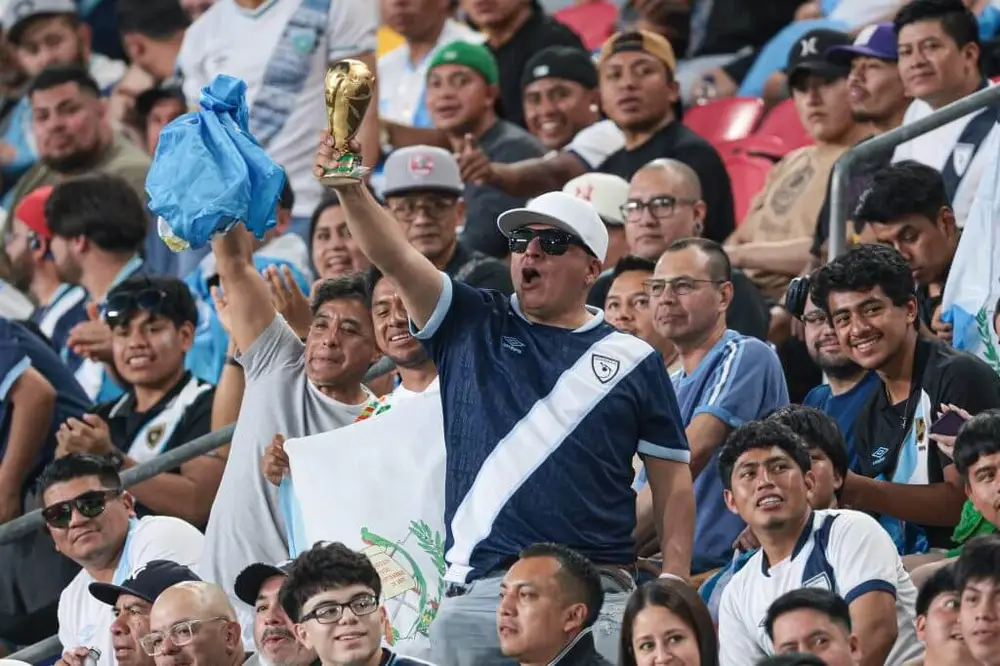
Then there is the ongoing controversy over the cost to attend games, a problem that prompted Football Supporters Europe to call the pricing a “monumental betrayal.” As the new year was set to begin, the group urged FIFA to halt ticket sales. Of course, that didn’t happen.
Infantino has mostly shrugged. It’s just the cost of doing business in America, he says. Most visiting fans will need to scrape together thousands — probably tens of thousands — to pay for multiple tickets, food and drinks, flights, hotels and in-city transportation. FIFA’s resale website recently advertised four tickets to the final with a price tag that would give even Ronaldo pause: $2.3 million each.
It seems like a self-defeating formula, a level of money-grubbing that will result in a stodgy, corporate audience: the kind of crowd with people checking their phones during a corner kick.
Permission granted?
In several countries, the U.S. Embassy posted the same notice a few months ago: A World Cup ticket does not guarantee a visa. Fans purchase tickets entirely at their own risk.
It was just a bureaucratic disclaimer. It became the most honest sentence written about this World Cup.
For many supporters, the obstacle wasn’t money. It was permission.
Even for fans who needed no visa, the tournament revealed a different kind of exclusion. Scotland supporters, preparing for their country’s first World Cup in 28 years, were charged $95 for a 25-mile round-trip bus between Providence, R.I., and Foxborough, Mass. So they organized their own buses, cutting the cost in half. Germany offered free public transit in 2006. Russia made long-distance trains free in 2018. Qatar provided free metro access in 2022. The United States offered a $95 bus fare and called it hospitality.
The consequences extended beyond fans. Iran relocated its training camp from Arizona to Tijuana, where access to the United States was no longer required. Iranian officials said the team was not competing on equal terms. FIFA treated the matter as resolved.
In Morocco, defender Zakaria El Ouahdi was left behind when the national team departed after his visa was rejected twice. Federation officials intervened and eventually secured his entry. He joined his teammates only after enough pressure was applied to change the outcome.
For those who do make it through, arrival does not guarantee relief. Human Rights Watch reported at least 167,000 ICE arrests in and around the 11 U.S. host cities between January 2025 and March 2026. Proposals to screen visitors’ social media activity and political views added another layer of scrutiny. Fans arriving to celebrate the world’s most popular tournament do so knowing that certain passports, appearances and backgrounds invite additional attention.
Access is the exception.
About The Author