












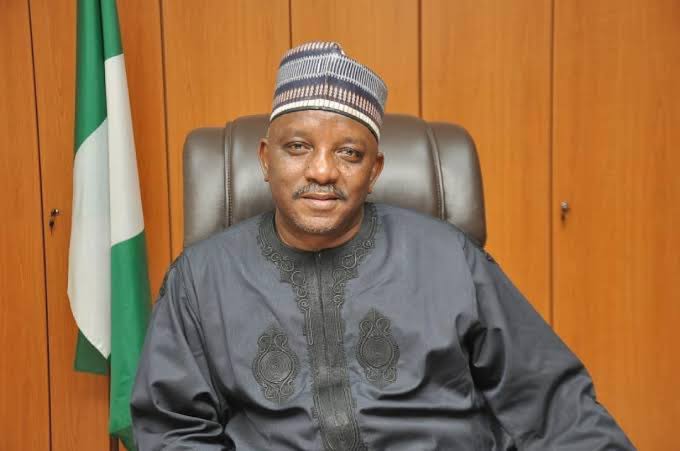
In a landmark ruling that has sent shockwaves through Nigeria’s political and power sectors, a Federal High Court in Abuja on Wednesday, May 13, 2026, sentenced former Minister of Power, Engr. Saleh Mamman, to a total of 75 years imprisonment for money laundering and fraud involving ₦33.8 billion.
The conviction and sentencing mark one of the most significant anti-corruption victories in recent years, especially in the perennially troubled power sector where billions of naira have historically disappeared with little accountability.
Who is Saleh Mamman?
Mamman Kwagyang Saleh (born January 2, 1958) is an engineer from Taraba State. He served as Nigeria’s Minister of Power from August 21, 2019, to September 1, 2021, under former President Muhammadu Buhari. Before his ministerial appointment, he had a background in electrical/electronics engineering, with training from Kaduna Polytechnic and Bayero University Kano.
His tenure as Power Minister coincided with continued struggles in Nigeria’s electricity supply, despite huge budgetary allocations for power infrastructure.
The Case: ₦33.8 Billion Diverted from Hydroelectric Project
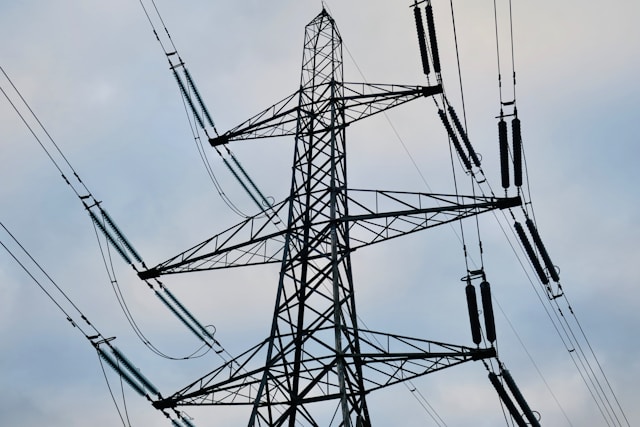
The Economic and Financial Crimes Commission (EFCC) arraigned Mamman on a 12-count charge bordering on conspiracy, money laundering, and unlawful diversion of public funds. The money in question was earmarked for the Mambilla and Zungeru Hydroelectric Power Projects — two flagship initiatives expected to significantly boost Nigeria’s electricity generation capacity.
According to court proceedings, Mamman allegedly conspired with ministry officials and private entities to indirectly convert the funds. A Bureau de Change (BDC) operator had earlier testified to receiving over ₦22 billion from the former minister.
On May 7, 2026, Justice James Omotosho convicted Mamman on all 12 counts, ruling that the EFCC proved its case beyond reasonable doubt. Sentencing was delivered today, with the judge ordering the prison terms to run consecutively, resulting in the 75-year total.
The court also issued a bench warrant for his arrest (as he was absent during proceedings) and ordered the forfeiture of properties and repayment of the diverted funds.
Reactions and Implications
The news has dominated headlines and public discourse, with many Nigerians expressing a mix of satisfaction and frustration:
- Satisfaction that a high-profile figure has finally been held accountable.
- Anger that such massive diversion occurred in a sector where millions of Nigerians still suffer from unreliable electricity.
- Questions about how many more similar cases exist and whether recovered funds will actually return to power projects.
This case highlights the deep-rooted challenges of corruption in Nigeria’s power sector — a sector that has consumed trillions of naira over decades with painfully slow progress.
What Does This Mean For Nigerians
While a 75-year sentence sends a strong deterrent message, its real impact will depend on:
- Whether Mamman is arrested and actually serves time.
- How much of the ₦33.8 billion can be recovered.
- Whether this leads to broader reforms and more prosecutions in the power ministry.
In a country where electricity remains a major obstacle to economic growth, cases like this underscore why Nigeria’s power sector continues to underperform despite its vast potential.
The fight against corruption is not won in courtrooms alone — it requires strong institutions, political will, and an active citizenry demanding accountability. As more details emerge, including possible appeals, this case will remain a reference point in Nigeria’s anti-corruption journey.