













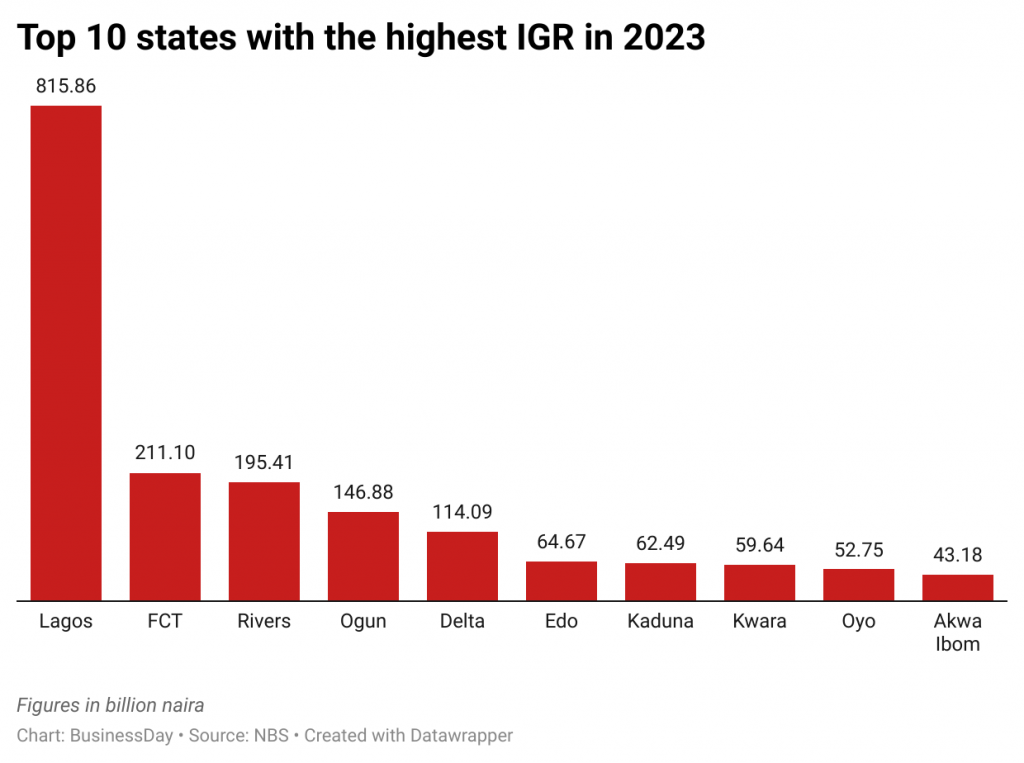
Lagos, Nigeria’s startup hub, generated ₦1.26 trillion ($857.57 million) in internally generated revenue (IGR) in 2024 — a 54.63% jump from ₦815.87 billion ($554.59 million) in 2023. This figure surpassed the combined ₦1.24 trillion ($841.97 million) earned by 31 other states, including Edo, Akwa Ibom, Kwara, Kano, Kaduna, Bayelsa, Jigawa, Oyo, Osun, Cross River, Ondo, Katsina, Abia, Anambra, Ekiti, Niger, Plateau, Kogi, Zamfara, Nassarawa, Bauchi, Imo, Borno, Benue, Adamawa, Sokoto, Gombe, Taraba, Kebbi, Ebonyi, and Yobe.

As Nigeria’s wealthiest state, Lagos had a labor force of 6.43 million in 2023, with 2.7 million aged 15–34. Pay-As-You-Earn (PAYE) tax — deducted directly from salaries — was its biggest revenue source, contributing ₦705.41 billion ($479.52 million) in 2024, up 58.62% from ₦444.73 billion ($302.32 million) in 2023. By comparison, the 31 states together earned ₦497.95 billion ($338.49 million) from PAYE.
Lagos hosts over 500 startups and attracts more than half of Nigeria’s startup investments. Tech hubs across Yaba and Lekki employ thousands of young people, fueling innovation and tax revenue. Governor Babajide Sanwo-Olu highlighted this in May, noting Lagos’s recognition by Dealroom.co as Africa’s fastest-growing tech ecosystem. The state plans to allocate 1.5% of its annual capital budget to an innovation fund to further strengthen its startup scene.
In 2024, Commissioner Gbenga Omotoso reported that six million Lagosians pay tax, with 4.5 million consistent contributors — 90% through PAYE. By Q1 2025, PAYE already accounted for 73% of the ₦333.29 billion collected. A 2025 policy document reaffirmed PAYE as the primary driver of IGR.
Despite this growth, Taiwo Oyedele, chair of the Presidential Fiscal Policy and Tax Reforms Committee, noted in March 2025 that Lagos’s revenue collection is still under 2% of its GDP. He suggested expanding personal income tax to digital and creative industries. Starting in 2026, new tax laws will include remote workers and freelancers, potentially boosting Lagos’s revenue further, given its dominance in Nigeria’s digital economy.
About The Author